ISSN : -
E-ISSN : 2146-3131

Impact Factor
Slider 1
Slider 3
Slider 4
Slider 5
Slider 6

News See All

Following its historic entry into the Q2 quartile in 2022, Balkan Medical Journal has now achieved Q1 ranking in 2024, making it the first Turkish medical journal to reach this top-tier distinction. With a notable Impact Factor of 3.8, this elevation underscores the journal’s commitment to excellence and its growing global influence in the field of medical research
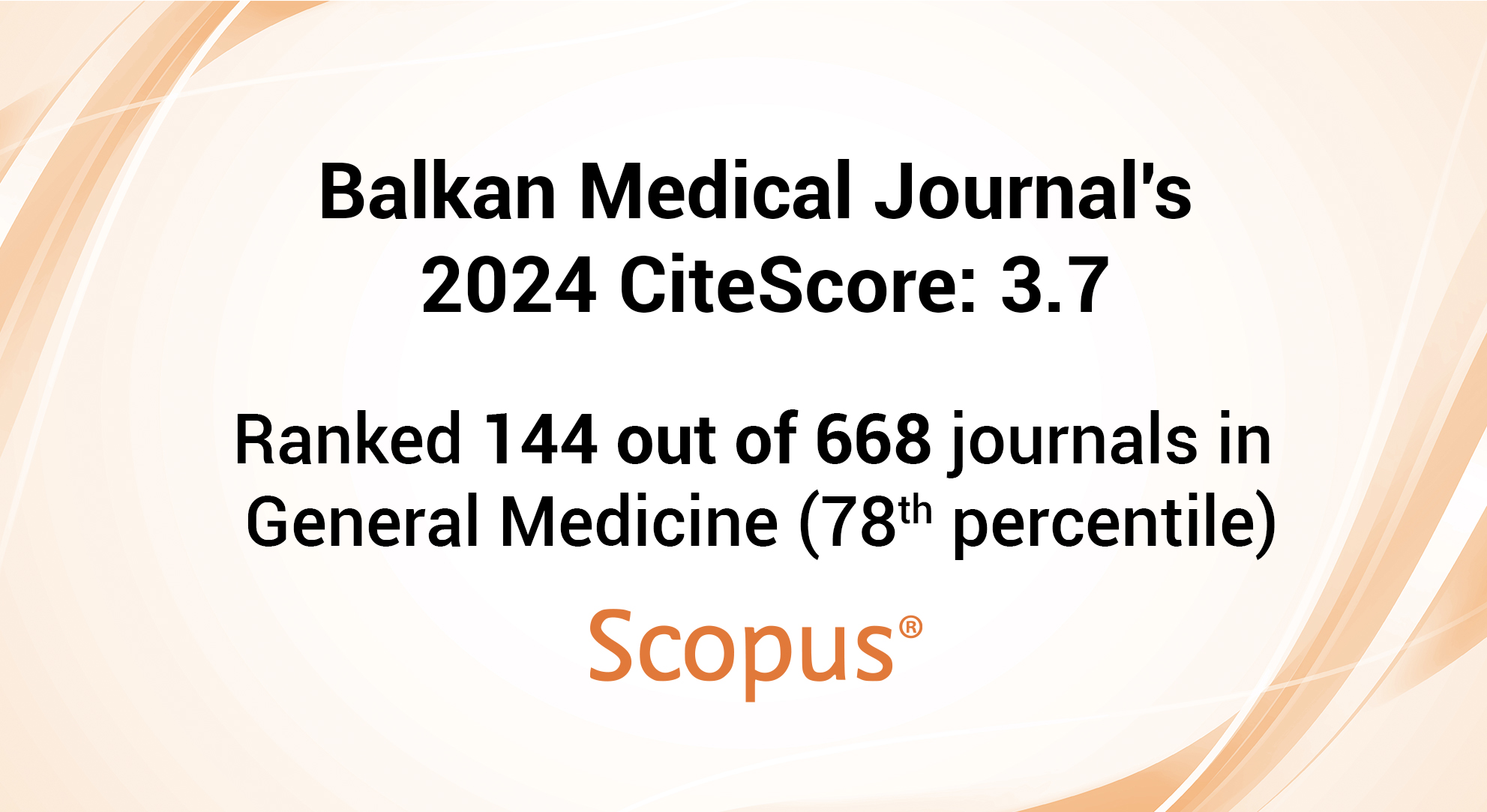
We are pleased to announce that, according to the 2024 Scopus data, Balkan Medical Journal has achieved a CiteScore of 3.7. This reflects the journal’s continued commitment to publishing high-quality, impactful research in the field of general medicine.  
We are pleased to report that our journal has achieved an Impact Factor of 1.9 for the year 2023.  
Balkan Medical Journal adopts the WAME recommendations on ChatGPT and Chatbots related to scientific publications http://www.balkanmedicaljournal.org/static.php?id=10  
In the field of computer science, known as artificial intelligence, algorithms imitate reasoning tasks that are typically performed by humans. The techniques that allow machines to learn and get better at tasks such as recognition and prediction, which form the basis of clinical practice, are referred to as machine learning, which is a subfield of artificial intelligence. http://balkanmedicaljournal.org/uploads/pdf/pdf_BMJ_2461.pdf
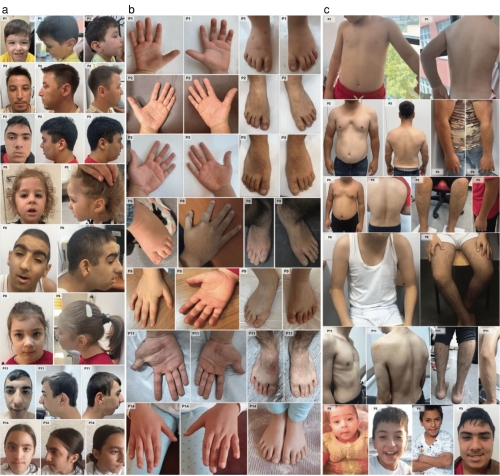
Type 1 interferonopathy is a novel context reflecting a group of inborn disorders sharing common pathway disturbances. This group of diseases is characterized by autoimmunity and autoinflammation caused by an upregulation of type 1 interferons (IFN)s due to certain genetic mutations. http://balkanmedicaljournal.org/uploads/pdf/pdf_BMJ_2501.pdf

Articles See All

Erjie Xie, Yuedi Tang
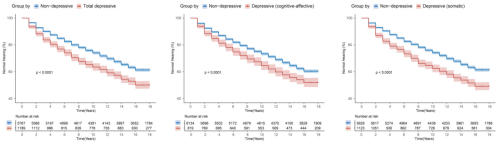
This study by Xie and Tang investigates whether the severity and longitudinal trajectories of depressive symptoms are associated with the risk of hearing loss among adults aged 55 years and older.

Serdal Ugurlu, Ozgur Can Kilinc, Ilker Karacan, et al.
This comprehensive review by Ugurlu et al. synthesizes current knowledge on the pathogenesis of Familial Mediterranean Fever, integrating genetic mechanisms, pyrin inflammasome biology, and emerging epigenetic regulatory processes that contribute to clinical heterogeneity and disease severity.
Sidem Gül, Reşit Taşdemir, Beyza Açıkgöz, et al.
Gül et al. developed and validated a multimodular artificial intelligence algorithm (SafeHeart) that enables fully automated assessment of left ventricular function by integrating ejection fraction calculation, wall motion abnormality detection, and regional myocardial segmentation from 2D transthoracic echocardiography in ischemic heart disease.
Miao Shi, Hu Sun, Yong Ma, et al.
Shi et al. investigated the association between the hemoglobin glycation index and the risk of delirium and 30-day all-cause mortality in intensive care unit patients with sepsis, demonstrating a U-shaped relationship between HGI and delirium risk.
Jiahan Ke, Xiaohan Qiu, Min Wang, et al.
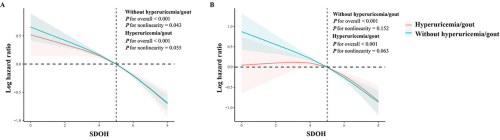
Ke et al. discovered that febuxostat-mediated urate-lowering medication dramatically improves clinical outcomes in heart failure patients with intact ejection fraction, especially those with increased serum uric acid and BNP levels.

Image Corner

3D CBCT reconstruction displaying lesion extent and bone destruction in Gorlin-Goltz Syndrome with PTCH1 Gene Mutation.

News from Balkan Medical Journal See All

Balkan Medical Journal continues its scientific journey in the Q1 quartile, as reported by Journal Citation Reports (Clarivate). Indexed in Science Citation Index Expanded (SCIE), the journal remains committed to excellence in medical research.
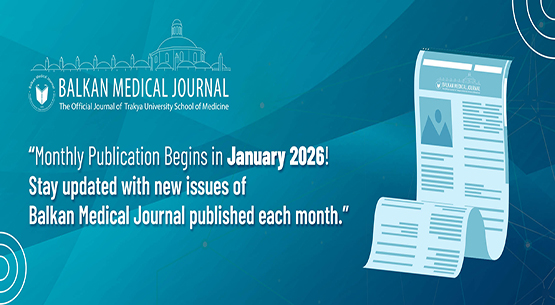
Starting in 2026, the Balkan Medical Journal will adopt a monthly (12 issues/year) and online-only publication model. This update aims to enhance publication efficiency, increase accessibility, and support faster dissemination of scientific content.